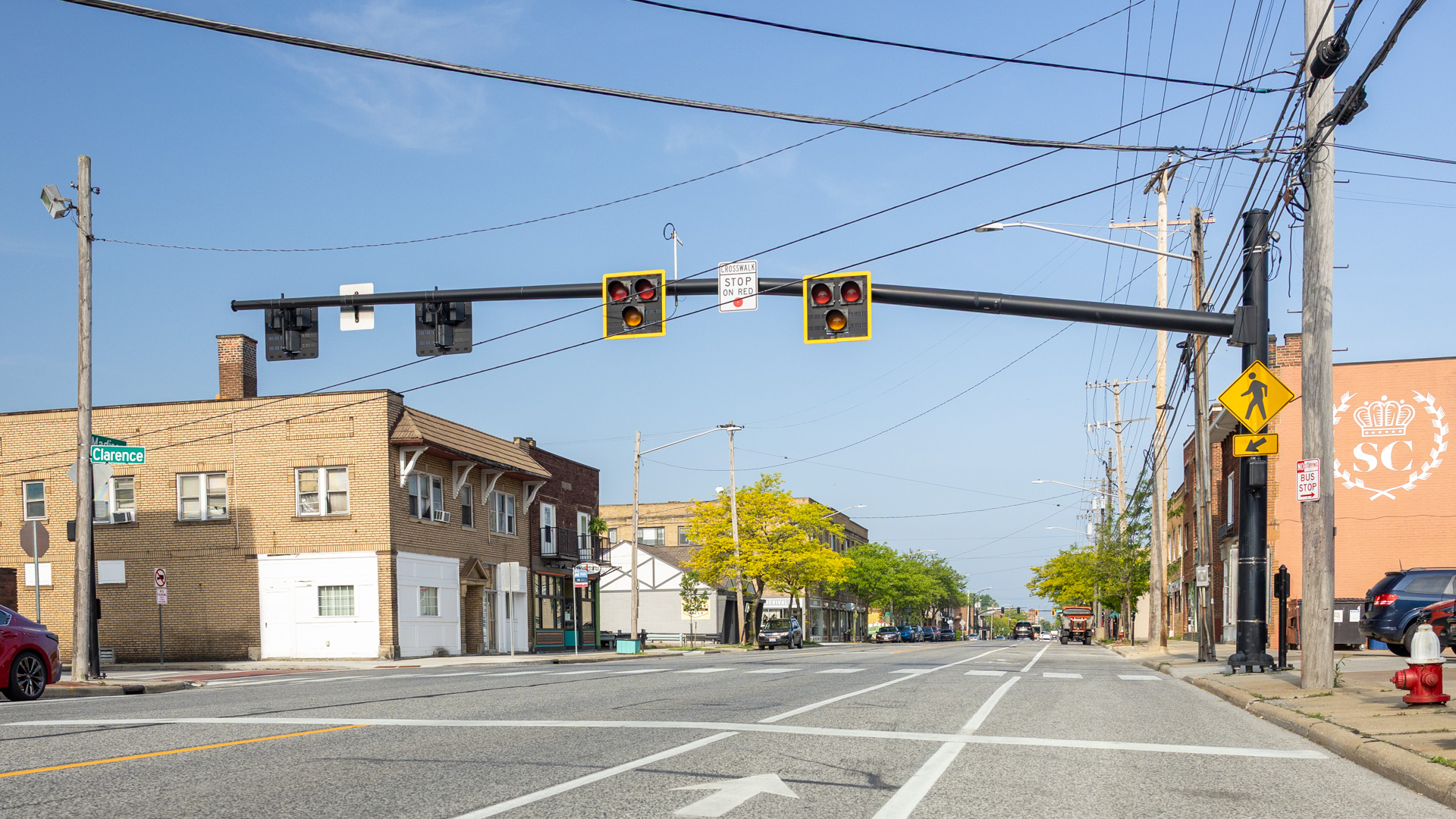
Walking Lakewood

Overview

Lakewood ranks as the most walkable city in Ohio by WalkScore with an overall score of 70. The City of Lakewood takes pride in providing safe pedestrian facilities throughout the city and is constantly working to improve pedestrian access, infrastructure, and safety.

In 2024, the City of Lakewood adopted its Active Transportation Plan and Safety Action Plan that work together inform and guide the design and implementation of infrastructure that provides safety for all modes of transportation.

ADA Curb Ramps

Since Lakewood’s ADA Task Force published its Self-Evaluation and Transition Plan in October of 2023, the City has prioritized the installation of ADA-compliant curb ramps on the city’s corners and street crossings.

In 2026, 25 compliant curb ramps are being installed to either repair or replace previously non-compliant ramps. In addition to the standalone curb ramp replacement program, ADA-compliant ramps are installed any time a street undergoes a water and sewer replacement project, gas line work, and resurfacing project.

Since 2023, the City has replaced 365 curb ramps altogether.

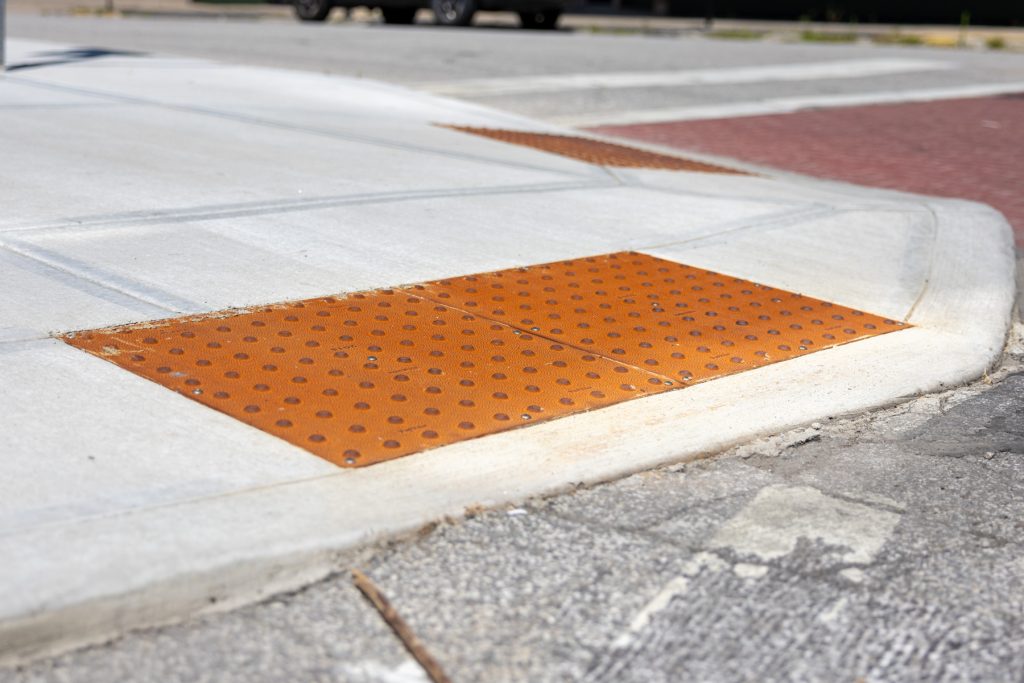
A curb ramp that feautures an iron textured pad for sightless persons.

Hi-Vis Crosswalks

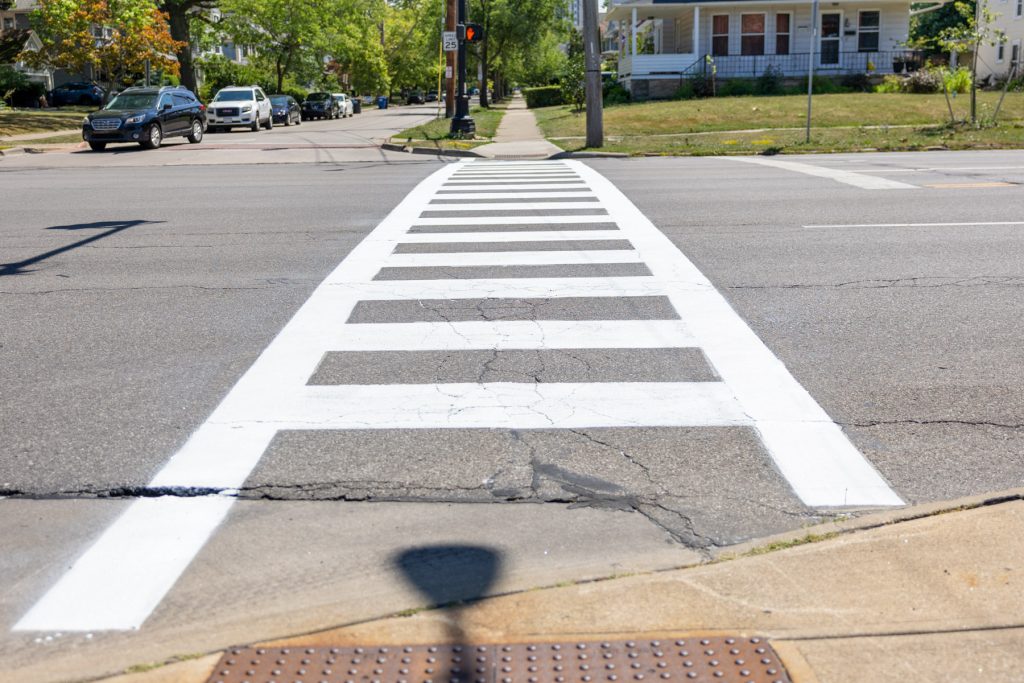
In addition to curb ramps, the City has continued to stripe high-visibility crosswalks at many city intersections. Instead of the basic “transverse” crosswalk style with two simple parallel lines, high-visibility crosswalks employ perpendicular stripes between the crosswalk lines to increase the overall visibility.

Studies by the Federal Highway Administration (FHWA) have shown that these crosswalks reduce pedestrian crashes and increase yielding by vehicle drivers, resulting in the FHWA to endorse the hi-vis crosswalks as a Proven Safety Countermeasure.

By the end of 2026, the City will have installed high-visibility crosswalks at all locations listed in all three priority levels of the 2024 Active Transportation Plan as well as some locations not listed in the Plan.

A high visibility crosswalk painted on a road - two parallel white lines connected by several perpendicular painted lines.

Types of Pedestrian Crossings

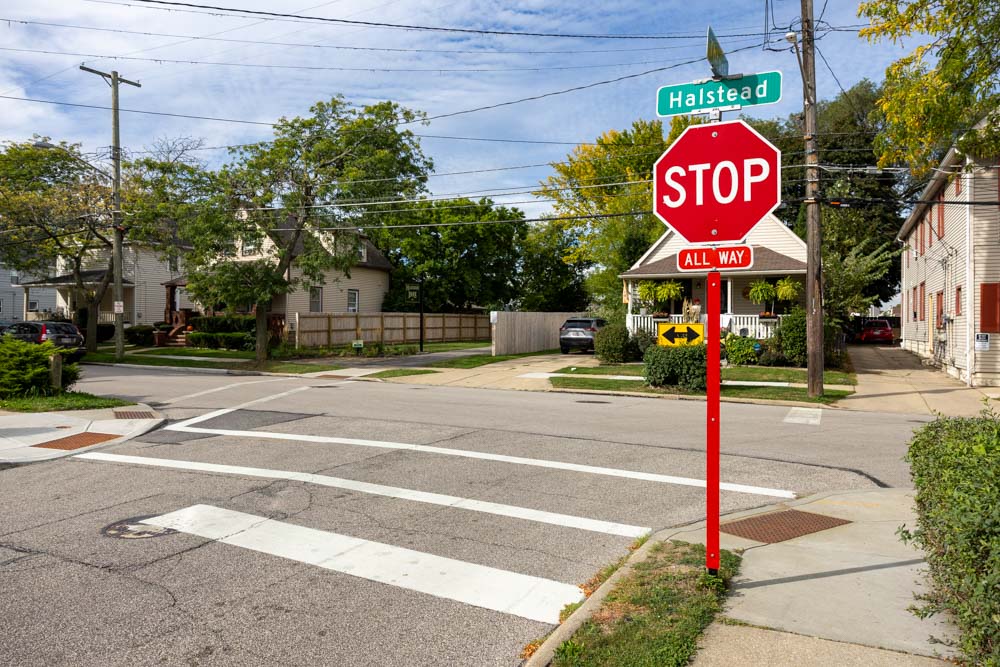
Stop Sign

  • Drivers MUST stop at marked stop line and yield to pedestrians crossing at stop signs.
  • If a building obstructs the view of crossing traffic, vehicles must stop at the stop bar, then creep forward.
  • Even with the right of way, pedestrians should make eye contact with drivers to make sure that they are safe to cross.

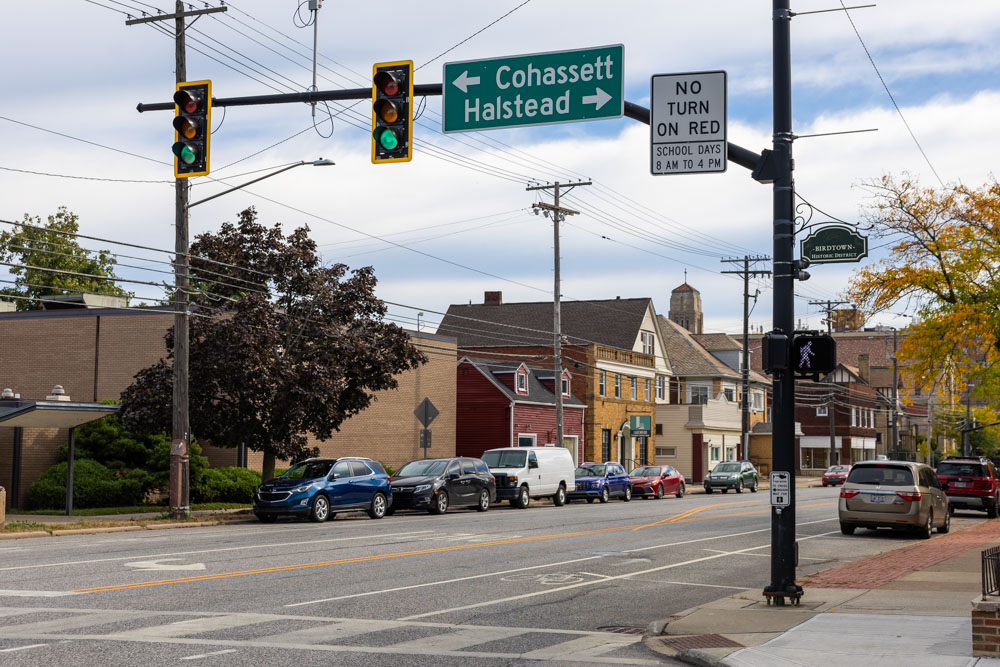
Standard Traffic Signal/Crossing

  • Drivers MUST yield to pedestrians crossing at red lights – especially when turning right on red.
  • Drivers must stop at the stop line and keep their vehicle out of the crosswalk.
  • Pedestrians must wait for “walk” signal to cross. Press button to activate the crossing if present.

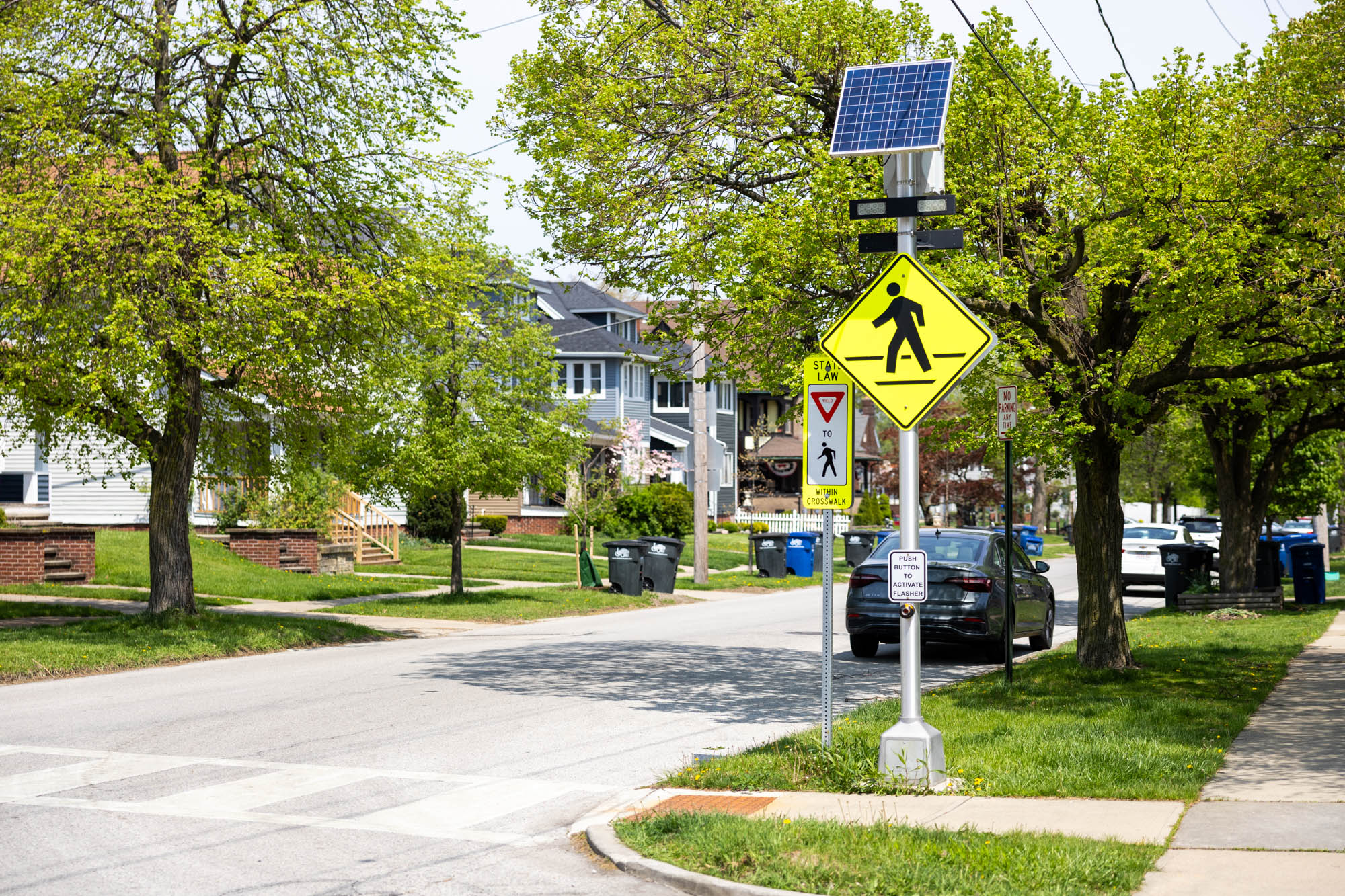
Rectangular Rapid Flashing Beacon (RRFB)

  • Lights activated when pedestrian presses button.
  • Pedestrians should wait for a gap in traffic or for vehicles to yield in both directions before crossing.
  • Vehicles MUST yield to pedestrians in crosswalk whether or not flashing lights are activated.

Pedestrian Hybrid Beacon (HAWK Signal)

  • Pedestrians activate signal by pressing button; cross with caution when pedestrian-facing signal indicates to walk.
  • Traffic-facing lights flash yellow (prepare to stop), then solid yellow (stop if it is safe), then solid red.
  • Vehicles MUST stop at red light; proceed on flashing red only if crosswalk is clear.
  • Visit our Pedestrian Hybrid Beacons page for more detailed instructions and a video demonstration of proper use.